Tax Credits
- Download Additional tax information and forms from Nu-Wool. Consult your accountant, tax advisor or IRS for IRS Form 5695 Residential Energy Credits.
-
Nu-Wool® Manufacturer's Statement - Existing Homes
-
Nu-Wool® Manufacturer's Statement - New Homes
-
New Homes Tax Credit FAQ
-
Existing Homes Tax Credit
- For Existing Homes:
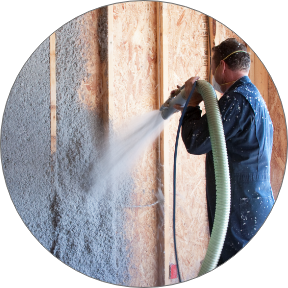
- Recently, the federal government increased the tax credit for qualifying purchases of insulation. By adding Nu-Wool Premium Cellulose Insulation to your home’s attic or walls, you may qualify for the tax credit while also saving on energy costs. It’s a win, win for you and the environment.
Qualifying for the tax credit is as simple as A-B-C!A. Have Nu-Wool Premium Cellulose Insulation installed in your home and save up to 40%* on energy costs.
B. Save your receipts.
C. Qualify for and claim a 30% tax credit on your 2009 return.
Making your home GREEN will save you GREEN with energy savings and tax credits!
Insulating your attic or walls with Nu-Wool Premium Cellulose Insulation may qualify you for a tax credit for 30% of the cost of materials for qualifying insulation projects throughout 2009 and 2010, up to a maximum of $1,500 lifetime limit.
Download this Nu-Wool Co., Inc. Manucfacturer’s Statement, fill it out, and take it, along with all receipts or itemized bills from your Nu-Wool Certified WALLSEAL Dealer showing the amount spent on insulation materials between January 1, 2009 and December 31, 2009, to your tax professional to the claim the credit.
Find your local Nu-Wool Certified WALLSEAL Dealer!
Leave the work to professionals! Have a Nu-Wool Certified WALLSEAL Dealer install Nu-Wool Premium Cellulose Insulation in your home. Nu-Wool Certified Dealers complete a comprehensive installation and certification program by the industry experts at Nu-Wool Co, Inc.
Find your local dealer!
For complete Energy Tax Credit information, please visit Energy Star's website. - For New Homes:
Frequently Asked Questions About Tax Credits - This page is presented to provide general information on the new federal tax credit for new homes and is not intended to be an interpretation of eligibility for the tax credit. Please consult with a qualified tax advisor to discuss eligibility.
- Source - RESNET- Residential Energy Services (n.d.) Retrieved April 2009, from http://www.resnet.us/taxcredits/faq-raters.htm
- Q: In general what allows a home to qualify for the tax credit?
A: To meet the energy saving requirements, a home must use no more than 50% of the energy used by a home built to 2004 International Energy Conservation Code (IECC) standards.
Q: How does a rater determines if a home qualifies for the tax credit?
A: The only way to determine if a home will qualify for the tax credit is to have an analysis done using one of the approved IRS software programs. To find the most current list of these programs, click on IRS Eligible Software Programs.
Q: Who can qualify for the new homes tax credit?
A: Under the provision for energy efficient homes tax credit, an eligible contractor who constructs a qualified new energy efficient home may qualify for the credit. For specific qualifications to be eligible for the tax credit please consult with a qualified tax advisor.
Q: What qualifies as a new energy efficient home?
A: The home qualifies for the credit if:- It is located in the United States;
- Its construction is substantially completed after August 8, 2005;
- It meets the statutory energy saving requirements, and
- It is acquired from the eligible contractor after December 31, 2005, and before January 1, 2010, for use as a residence
A: No. The requirements to meet Energy Star and the tax credit are different. Qualification for Energy Star covers all energy use in a house, including water heating, lighting and appliances, while requirements for the tax credit only include space heating and cooling.
Q: What does an eligible certifier (home energy rater) need to sign and give to the builder for verification for the tax credit?
A: An eligible certifier needs to sign the following statement on every home they are verifying for the tax credit: “Under penalties of perjury, I declare that I have examined this certification, including accompanying documents, and to the best of my knowledge and belief, the facts presented in support of this certification are true, correct, and complete.”
Q: What is the time period in which the tax credit can be claimed?
A: To qualify for the credit, homes must be acquired from the eligible contractor after December 31, 2005, and before January 1, 2010.
Q: Can a homeowner apply for the tax credit?
A: No, only eligible contractors can apply for the tax credit.
Q: Can homes be verified for the tax credit using the “sampling” method?
A: Yes. The IRS allows sampling as long as the builder builds at least 85 homes a year and the eligible certifier (home energy rater) follows the current Environmental Protection Agency’s ENERGY STAR Homes Sampling Protocol Guidelines. Of course the certifier must also sign the required statement certifying the home’s compliance.
Q: Can multi-family homes be eligible for the tax credit?
A: Yes. The IRS defines all homes are eligible for the tax credit as long as the building is not more than three stories above grade in height.
Q: The IRS rules states that the tax credit is $2,000 per qualifying dwelling unit. How does the IRS define a “dwelling unit”?
A: The IRS defines a dwelling as a “single unit providing complete independent living facilities for one or more persons, including permanent provisions for living, sleeping, eating, cooking and sanitation.”
Q: What’s the difference between a tax credit and tax deduction?
A: Tax deductions reduce tax payer’s overall taxable income with the value of the deduction dependent on the payer’s tax bracket. Tax credits on the other hand reduce the amount of tax a taxpayer owes dollar for dollar. Tax credits are more economically powerful than deductions.